SPATIAL COMPUTING / PROOF OF CONCEPT
Exploring spatial computing for disaster recovery
I led the design of a working Apple Vision Pro proof of concept for an energy network operator, exploring how field intelligence could support disaster recovery decisions.
- Client
- Energy and utilities
- Year
- 2023
- Role
- Design lead
- Type
- Spatial computing proof of concept
Field Intel explored how Apple Vision Pro could help teams understand information from disaster-affected sites and plan recovery operations. I led the design from the initial idea through workshops and exploration to a working proof of concept.
What I owned
- Led the design exploration with access to pre-release Apple Vision Pro hardware.
- Facilitated workshops to shape the concept and its use in disaster recovery.
- Carried the idea through experience design and development of a working proof of concept with the team.
Context
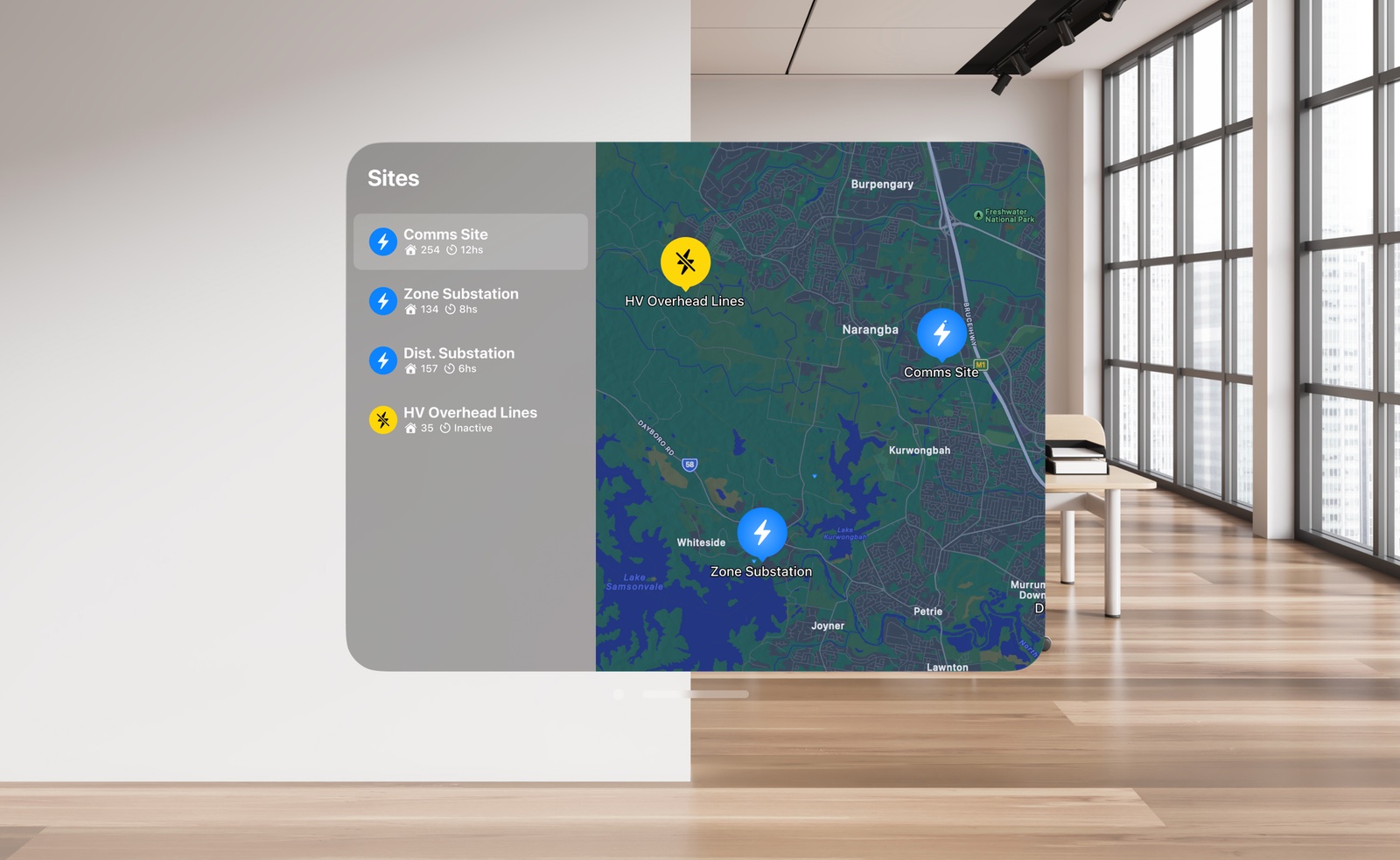
After a major weather or disaster event, field intelligence officers need to assess affected sites and coordinate a response. Our concept brought together information captured using iPhones and iPads, drone scans and 3D models, so the operations team could analyse it and plan how to get the network back online.
Approach and decisions
I worked through short cycles of learning, making and sharing. Sketches and prototypes helped us explore the idea; the simulator and on-device work helped us understand how it actually felt in space.
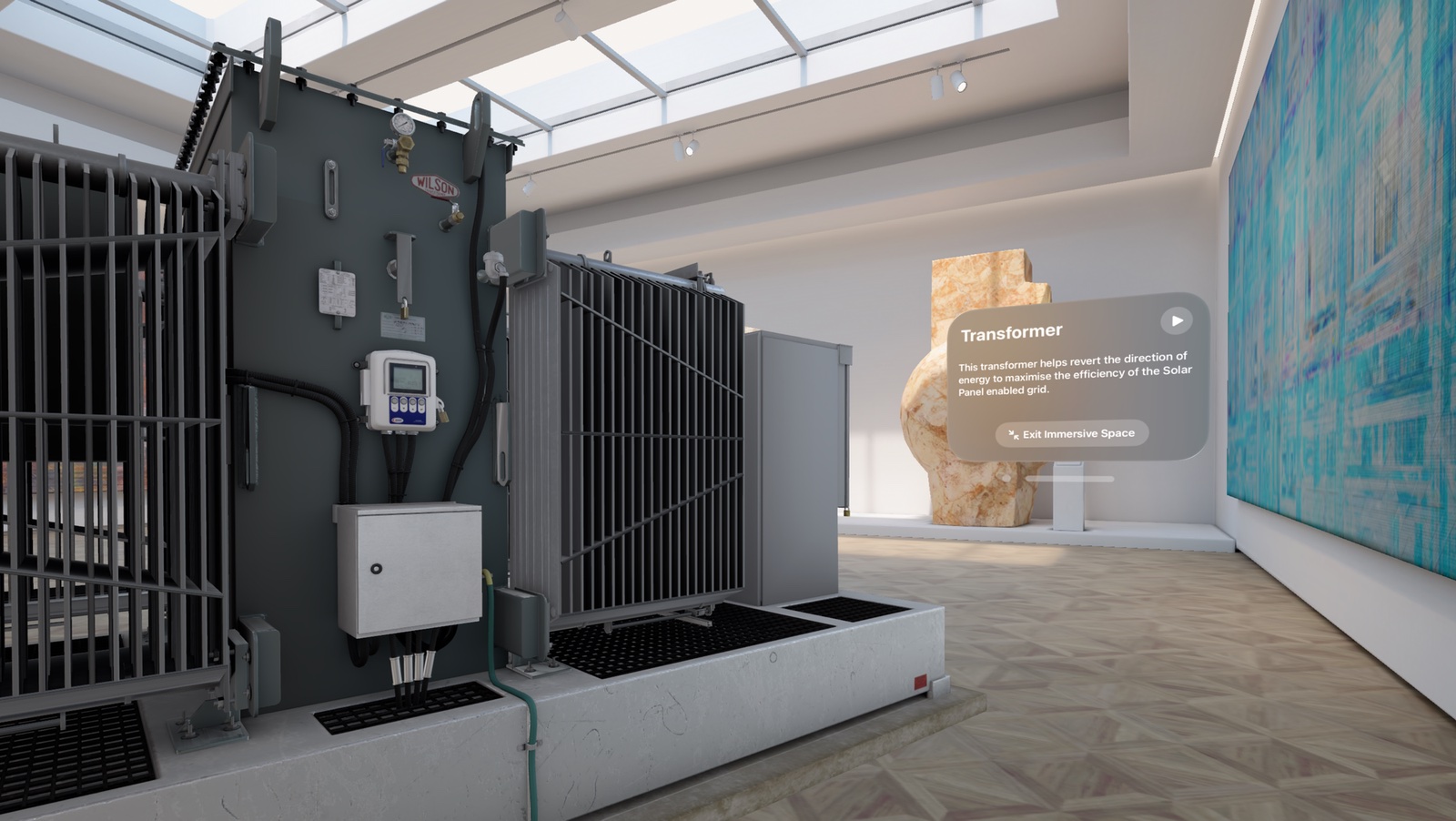
Our early interface put spatial content several views deep. We moved the 3D content forward, then reduced the supporting interface so it could sit comfortably alongside other apps. In immersive views, the main window became a smaller navigation and command tool.
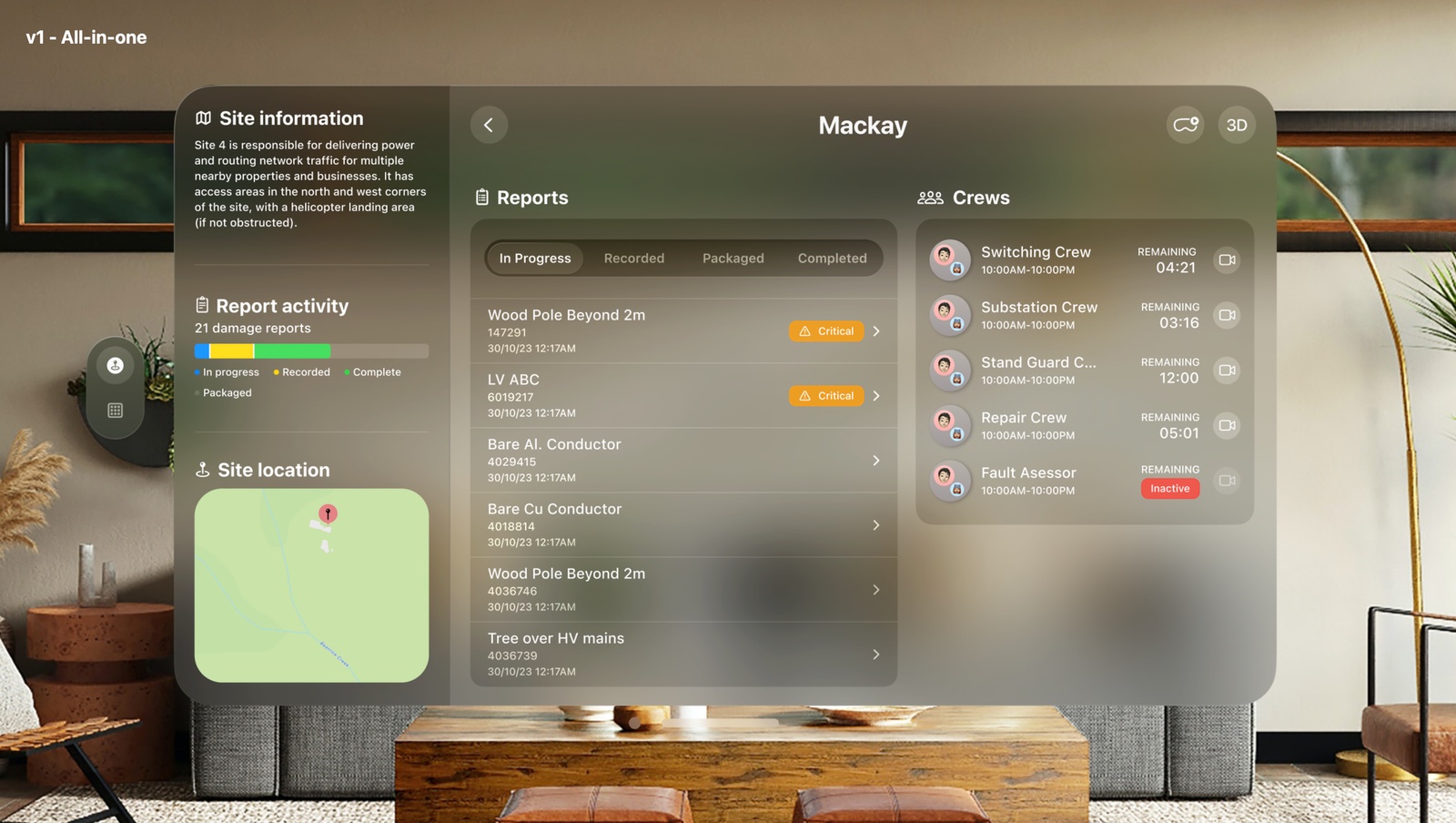
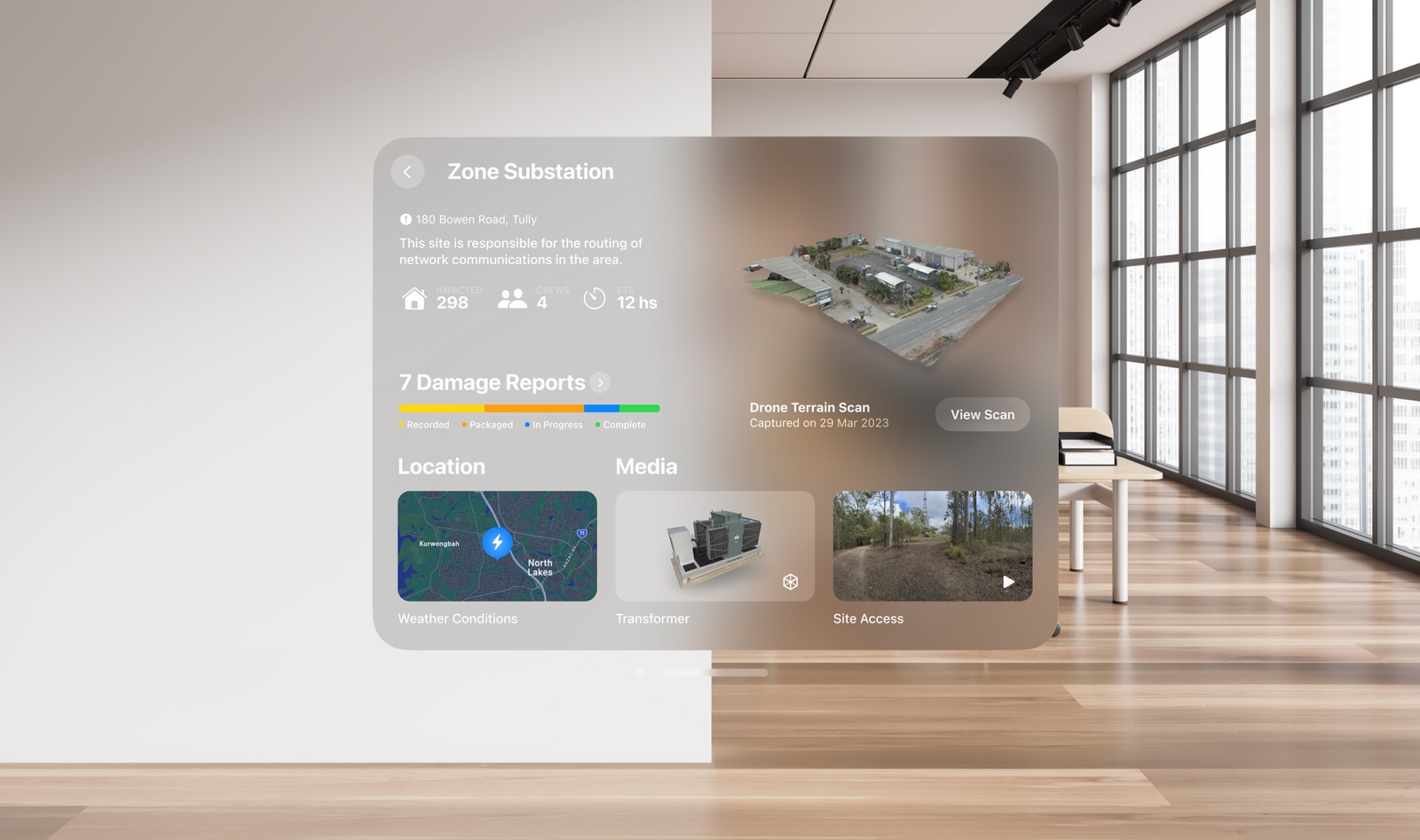
Native components gave familiar interactions a foundation. That let us concentrate on the spatial part of the experience: making the 3D asset the focus, with supporting information around it.
Result
We developed a working proof of concept that demonstrated the potential of Apple Vision Pro for the operator's disaster recovery work. The project gave us a concrete experience to explore and discuss, taking the idea beyond a presentation or a set of screens.
The proof of concept gave the operator the confidence to include Apple Vision Pro in its technology roadmap and upgrade its iPhone fleet so teams could start capturing spatial video assets.
What I learned
Testing inside the device changed the design in ways a flat canvas could not. Scale, attention and the relationship between windows mattered as much as the interface itself.
Related writing
Read Designing for Apple Vision Pro for more on the design process.